


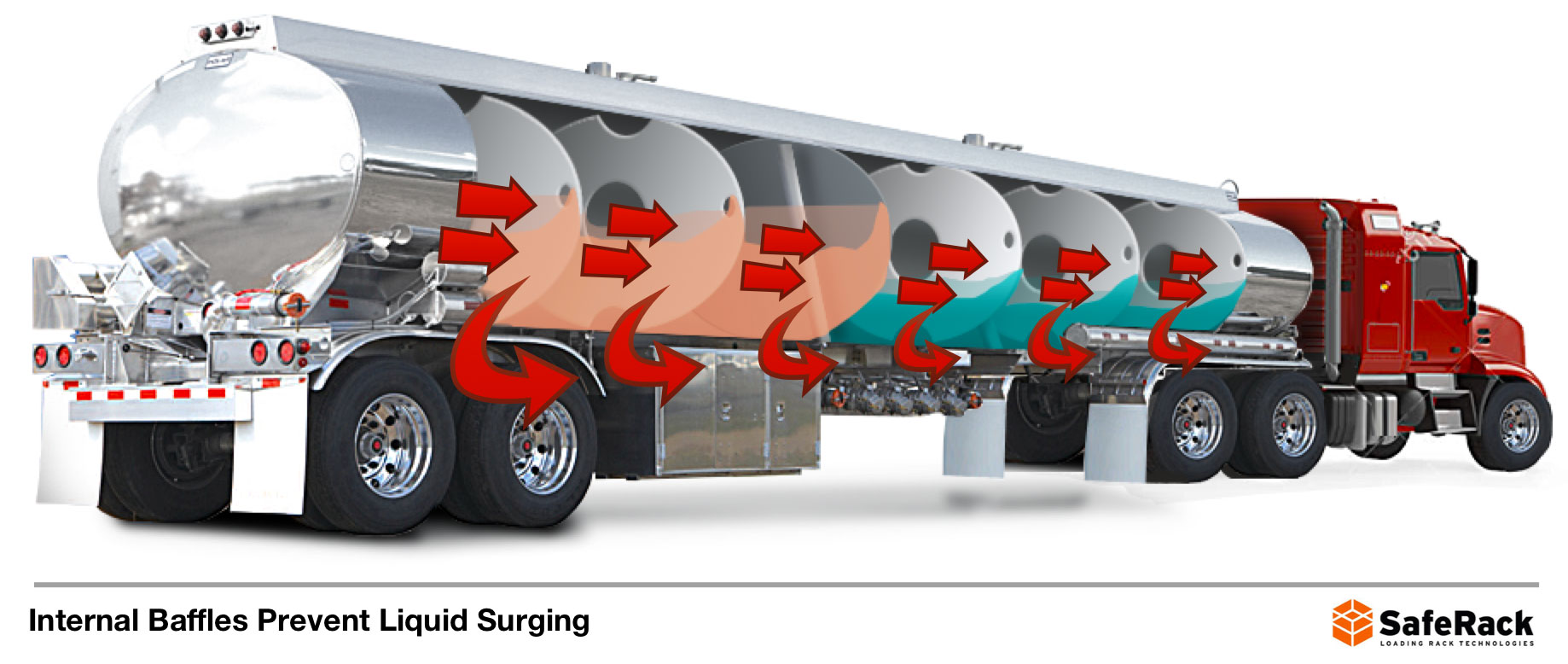
Baffles are internal structural components used in tanker trucks and ships to control the movement of liquid cargo. These angled dividers, designed with openings, slow down the front-to-back motion of liquids, reducing instability during transport.
As a result, baffles play a critical role in improving safety when transporting fuel, chemicals, and other bulk liquids.
How Tanker Baffles Work
Baffles are installed inside tanker compartments to manage liquid movement:
- They divide the tank into sections
- Openings allow controlled liquid flow between sections
- They reduce sudden shifts in liquid weight
- They stabilize the tanker during motion
During acceleration, braking, or turning, liquid cargo naturally shifts. However, baffles limit this movement, making the vehicle easier to control. In fuel transport operations, systems like truck loading systems ensure safe and efficient filling of tanker compartments.
Why Sloshing Is Dangerous
Liquid cargo creates powerful internal forces due to motion:
- Forward and backward movement during braking
- Side-to-side movement during turns
- Increased instability on slopes or uneven roads
Without control, this movement can lead to:
- Loss of vehicle control
- Increased rollover risk
- Jackknife accidents
- Uneven weight distribution
Therefore, controlling slosh dynamics is essential for safe tanker operation. Additionally, spill containment systems help protect the environment in case of leaks or accidents.
Key Benefits of Baffles
- Reduce liquid surge inside the tank
- Improve vehicle stability and control
- Distribute weight more evenly
- Lower the risk of rollovers and accidents
- Enhance overall transport safety
Moreover, integrating grounding and monitoring systems helps prevent static discharge when handling flammable liquids.
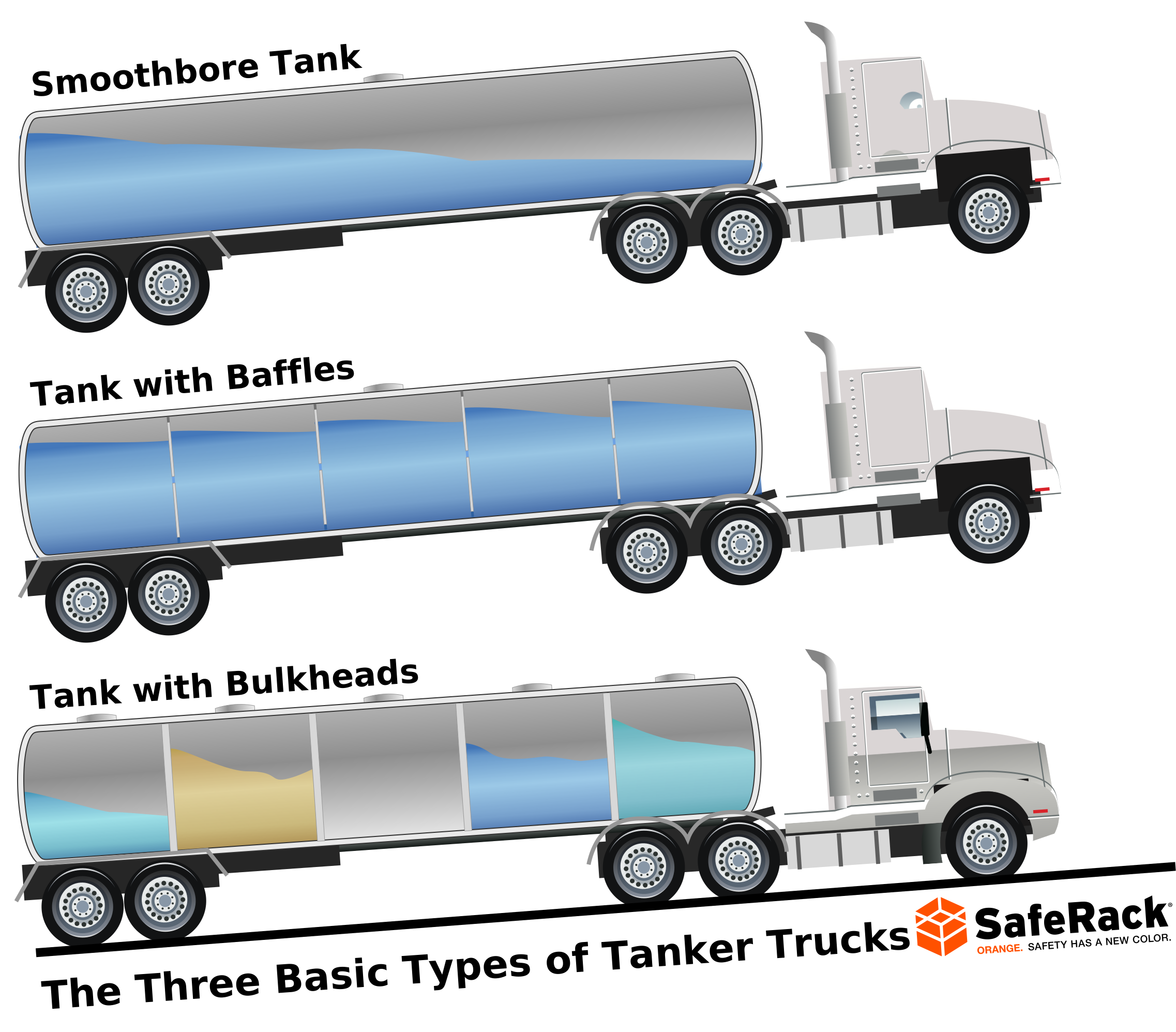
Baffles vs Smoothbore Tankers
Tankers are generally designed in two ways:
Baffled Tankers
- Contain internal dividers with holes
- Control liquid movement
- Provide better driving stability
Smoothbore Tankers
- Have a single open compartment
- Allow free liquid movement
- Easier to clean for food-grade transport
- Higher risk of instability when partially filled
Because of this, baffled tankers are preferred for transporting hazardous liquids. For loading and unloading operations, loading racks and skids provide safe access and structural support.
Role in Tanker Safety Design
Baffles work alongside other tanker safety features to improve performance:
- Bulkheads divide tanks into compartments
- Low center of gravity improves balance
- Reinforced tank structures add durability
Together, these features help maintain control under dynamic conditions. In large scale operations, railcar loading systems are also used to manage bulk liquid transfers safely.
Slosh Dynamics Explained
The movement of liquid inside a tank is influenced by inertia, often referred to as slosh dynamics.
- Liquids form waves when the tanker moves
- These waves create shifting forces
- Uncontrolled waves increase accident risks
Baffles break up these waves and distribute energy evenly throughout the tank.
Applications of Tanker Baffles
Baffles are used in:
- Fuel tanker trucks
- Chemical transport vehicles
- Oil tankers and ships
- Bulk liquid transport systems
In these environments, fall protection systems ensure worker safety during inspection and maintenance.
Why Baffles Are Important
Without baffles:
- Liquid cargo moves freely and dangerously
- Vehicle control becomes difficult
- Risk of accidents increases significantly
Therefore, baffles are essential for safe and stable transportation of liquid cargo.
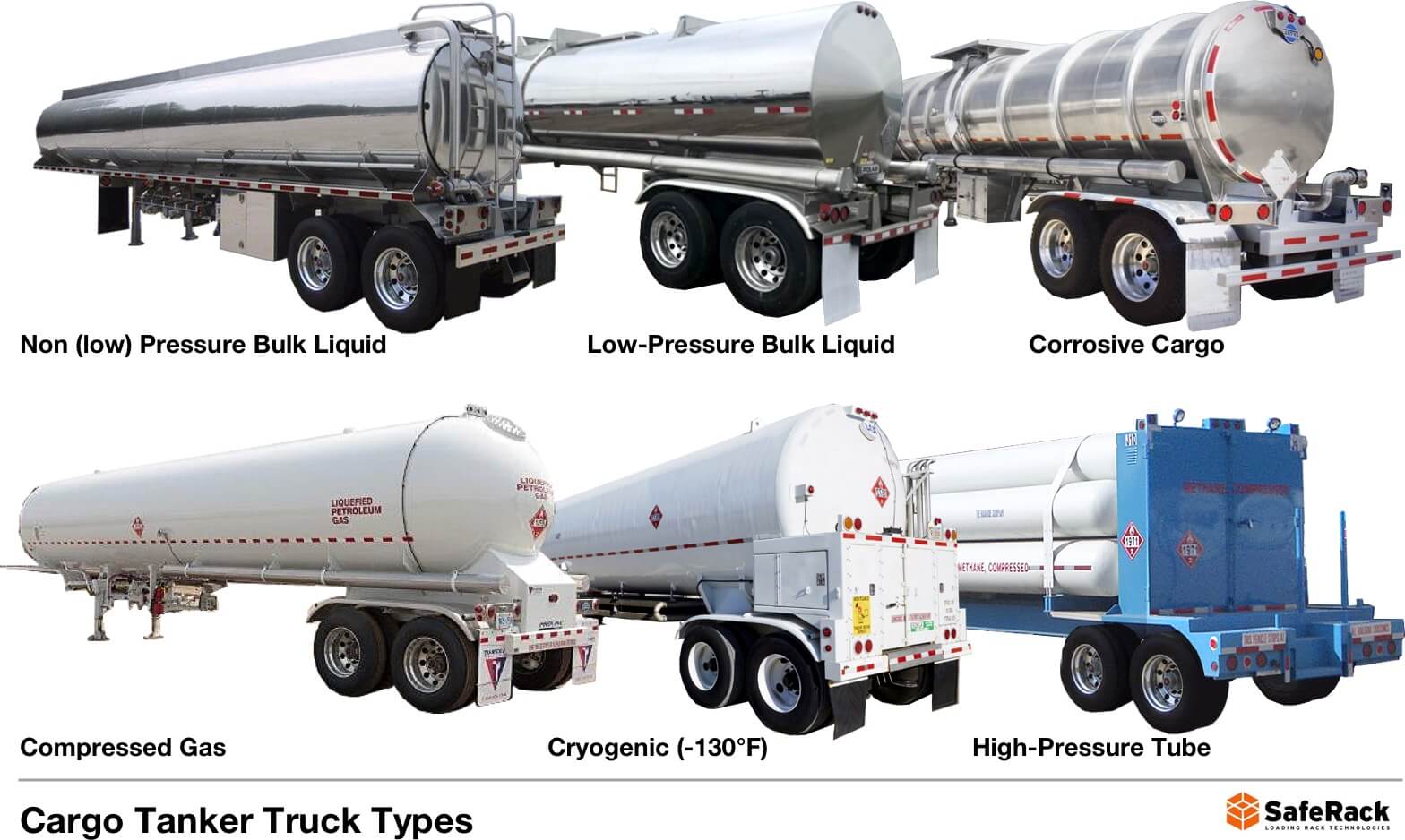
Truck Tanker Types
Fuel transport safety is a major concern for any company that moves and distributes fuel. Various cargoes require different types of tankers to safely get the cargo over the road per Department of Transportation requirements. Fuel depots, chemical transport companies, and gas transport companies need safe and reliable tankers to hold that material.
Baffles are internal dividers that control the movement of liquid cargo inside tanker compartments.
They reduce sloshing, improve stability, and help prevent accidents during transport.
No, some smoothbore tankers do not have baffles, but they are less stable when partially filled.
They distribute liquid weight evenly and reduce sudden shifts that can destabilize the vehicle.